Fitness and pool
Gym, pool, yoga, and indoor wellness spaces are high-frequency amenities; check size, timings, crowding rules, and safety supervision.
Clubhouse scale, weekly-use amenities, construction specs, and maintenance realities that affect resale.
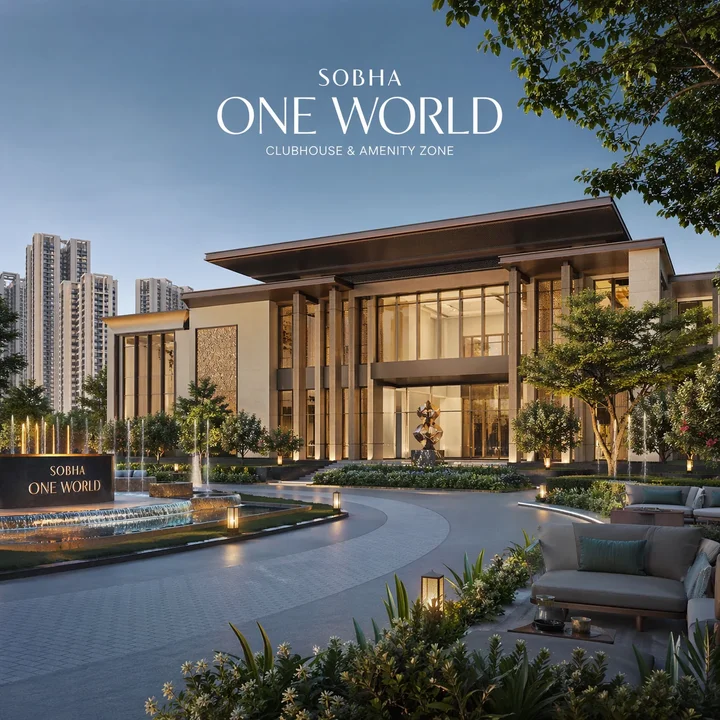
Sobha OneWorld's amenity list is long, but buyers should not treat all amenities as equal. In a large township, real value usually comes from the facilities residents use every week: walking tracks, fitness spaces, swimming pool, children's play, senior seating, indoor games, co-working, daily convenience, security, power backup, water recycling, and well-maintained open areas. Sobha Sacred Grove by the Lake is useful because amenity value depends on how often residents will use the facilities, how they are maintained, and whether the operating cost feels justified.
The public narrative mentions a 75,000+ sq. ft. clubhouse and 55+ amenities. That sounds impressive, and in a 48-acre Phase 1 township the clubhouse can become a real social anchor. The key question is capacity. A clubhouse that works for a few hundred homes may feel strained in a phase with thousands of apartments. Buyers should ask how access is managed, whether booking systems apply, which facilities are included in maintenance, and which are paid separately.
Amenity value also changes by life stage. Families with young children need safe play areas, stroller-friendly paths, shaded seating, and easy access from towers. Teenagers need sports courts, cycling, indoor games, and informal hangout spaces. Working adults value gym, pool, co-working, cafe, convenience retail, and reliable parcel/delivery handling. Senior residents need quiet seating, walking loops, medical access, lighting, benches, and lifts that make movement low-stress.
A premium amenities package creates maintenance responsibility. Pools, gyms, sports courts, landscaped gardens, STP systems, lifts, basements, lighting, security, and clubhouses all need long-term operating budgets. If maintenance is underpriced, quality suffers later. If maintenance is high, monthly ownership cost rises. Buyers should not ask only “what amenities are included?” They should ask “what will it cost to keep them usable?”
The right amenities conclusion is balanced. Sobha OneWorld has enough scale to create a meaningful lifestyle ecosystem if executed well. But the buyer should evaluate the amenity plan through use, capacity, phasing, and maintenance. The best amenities are not the most unusual ones. They are the ones that quietly make daily life easier for years.
Gym, pool, yoga, and indoor wellness spaces are high-frequency amenities; check size, timings, crowding rules, and safety supervision.
Play zones, walking paths, open lawns, and traffic-separated areas affect everyday family comfort more than rare-use features.
Jogging, cycling, tennis, basketball, cricket nets, skating, and multi-sport courts need placement that avoids conflict with tower quiet zones.
Co-working, cafe, retail, parcel systems, and guest rooms can reduce dependency on external Hoskote infrastructure during early years.
Benches, shade, lighting, smooth paths, low-noise gardens, medical access, and lift reliability matter for multi-generational living.
CCTV, access control, visitor management, power backup, STP, rainwater harvesting, and EV readiness are practical amenities, not afterthoughts.
Fitness amenities are often the first things buyers notice, but their usefulness depends on capacity. A gym in a 3,484-unit Phase 1 needs enough equipment, ventilation, maintenance, trainers or attendants, and operating hours. A swimming pool needs water treatment, lifeguard policy, children’s safety, deck space, changing rooms, and clear resident/guest rules. Without operations, even a beautiful pool becomes a weekend crowding point.
Children’s amenities should be judged by safety and age range. A toddler play area is not enough for a township that will house school-age children and teenagers. Ask whether play zones are separated by age, whether surfaces are safe, whether there is shade, whether parents have seating, and whether vehicle movement is kept away. Families should also look at school-bus pickup zones, lobby waiting areas, and rainy-day indoor options.
Sports courts can add real value, especially in a peripheral township where residents may prefer staying within campus on weekdays. But placement matters. Courts near towers can create noise; courts too far from residential blocks can feel unsafe at night; courts without booking systems can create conflict. Buyers should ask how sports zones are distributed and managed.
Co-working and convenience retail are underrated in a 2031 Hoskote decision. If the location is still maturing at possession, internal co-working, a small store, cafe, pharmacy-like convenience, or service counters can make daily life smoother. The buyer should verify what is committed by the developer and what is merely a possible future operator.
Senior-friendly amenities are often less glamorous but more important over time. Wide walking paths, ramps, benches, handrails where needed, lighting, quiet gardens, and easy lift access can make the difference between a township that only looks young and one that supports real families. Multi-generational buyers should walk the model layout with this lens.
Security and services should be treated as amenity infrastructure. Visitor management, delivery handling, CCTV, basement lighting, fire systems, power backup, water treatment, stormwater drainage, and solid-waste management all affect the quality of life. These are not decorative features, but they are exactly what make a large township feel professionally run.
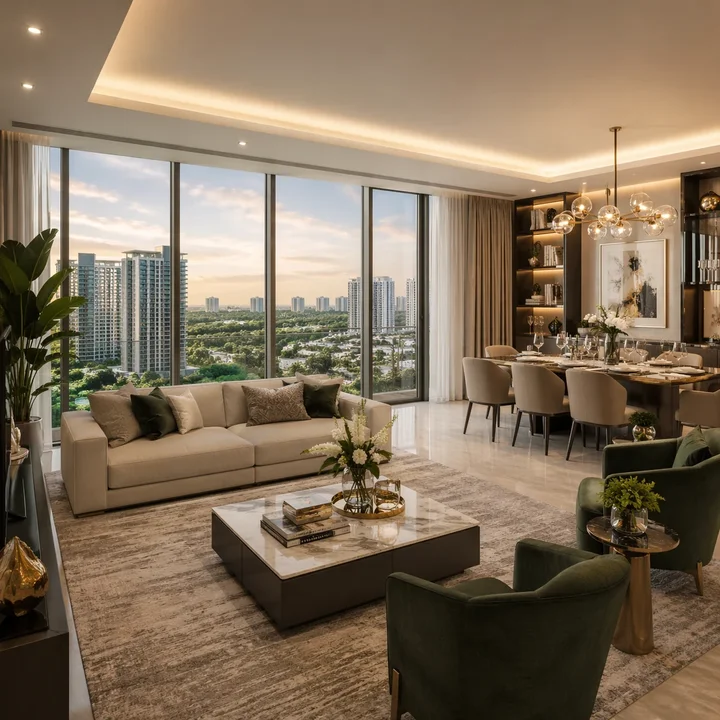
Apartment specifications need careful reading because buyers often remember the render and forget the handover list. A furnished living room image may show decorative lights, furniture, art, wall panels, curtains, appliances, rugs, and ceiling details that are not included. The specification sheet is the contract-level reference. It should clearly define flooring, wall finish, windows, doors, bathroom fittings, kitchen provisions, balcony railing, electrical points, power backup scope, and any smart-home features.
Sobha’s brand reputation creates expectation around finish quality, and that expectation is part of the premium. Still, a buyer should ask what exactly is included in Sobha OneWorld rather than assuming all Sobha projects have identical specifications. Large townships can have phase-specific specification packages. Premium towers and compact units may not share the same details. Always match the specification sheet to the exact unit and phase.
Bathrooms are worth special attention. Check sanitaryware brand, CP fittings, shower partition provision, geyser points, ventilation, anti-skid flooring, counter type, exhaust provision, and whether fixtures are standard across all bathrooms. For a premium buyer, bathroom quality strongly affects daily satisfaction and future resale impression.
Kitchen and utility planning deserve equal attention. Many apartment buyers discover after possession that utility width, washing-machine placement, gas line, sink position, and storage walls limit actual use. Ask whether a dry balcony or utility is included, where washing-machine drainage sits, whether piped gas is planned, how kitchen ventilation works, and what electrical load is provided for appliances.
Balconies should be judged by depth and privacy, not only number. A shallow balcony is more visual than usable. A balcony facing a central green can be valuable; a balcony facing another tower at close distance may be less attractive. Buyers should ask for tower spacing, view direction, parapet/railing details, safety provisions, and whether AC outdoor units affect balcony usability.
The final specification rule is to take notes during the model-flat visit. Mark what is included, what is upgrade, what is interior design, and what is just staging. If the sales team says something is included, ask for it in the specification sheet or cost sheet. This protects both expectation and negotiation.
Large amenity ecosystems create a hidden long-term question: monthly maintenance. A buyer may focus on the launch price and EMI, but the monthly cost after possession will include common area maintenance, sinking fund, clubhouse operations, security, housekeeping, landscaping, lift maintenance, STP operations, power backup diesel or electricity, water pumping, and repairs. The larger and more premium the amenity set, the more important this budget becomes.
Maintenance should be understood in phases. During early handover, the developer or facility manager may run the campus while the association is not fully formed. Later, resident associations may take over or co-manage. In a large township, different towers and phases may have different handover dates, which can complicate cost-sharing. Buyers should ask how maintenance is calculated before all towers are occupied and how costs are split between delivered and future amenities.
Water and STP operations are part of maintenance. If treated water is used for flushing and landscaping, STP performance affects both sustainability and everyday comfort. Poorly managed STPs can create odour and reliability issues. Well-managed systems reduce freshwater dependence and support large landscapes. Ask where STPs are located, how odour is controlled, and how treated water is used.
Power backup also has cost implications. A high-rise tower needs backup for lifts, common lighting, pumps, security systems, and sometimes a limited apartment load. Buyers should ask how much backup is included for each home, whether DG or other systems are used, and how fuel/electricity costs are charged. In tall towers, lift backup is essential, not optional.
Amenities also affect resale. A well-maintained clubhouse and landscape can help a 2031-2036 resale listing stand out. A poorly maintained amenity set can hurt the project’s premium story. That is why maintenance should not be viewed only as a cost to minimize. The right question is whether the proposed maintenance cost is enough to protect the lifestyle standard buyers are paying for.
The practical buyer should request three things: the initial maintenance estimate, the list of included services, and the handover/association plan. If these are vague during pre-launch, note them as items to re-check before Agreement of Sale. The amenity promise is only as good as the operating model behind it.
A young couple may value the gym, pool, cafe, co-working, parcel handling, and weekend leisure more than school-bus planning. For this buyer, Sobha OneWorld’s amenity strength depends on whether the township supports workdays without constant travel outside Hoskote. Co-working, reliable internet, convenience retail, and fitness access can make a peripheral location feel easier.
A family with small children should prioritize safety and routine. The best amenities are not the flashiest ones; they are shaded play areas, traffic-free walking, stroller-friendly paths, safe tower lobbies, school-bus waiting areas, clean toilets near play zones, and enough indoor options during rain. Parents should ask where children can play without crossing vehicle movement.
A family with teenagers needs different amenities: sports courts, cycling paths, indoor games, study or co-working zones, safe evening movement, and hangout areas that do not disturb older residents. A township can become more valuable when teenagers have healthy on-campus options instead of needing to travel for every activity.
Senior residents need quiet, predictable, and safe amenities. Benches, shade, smooth paths, handrails where needed, lighting, gardens, yoga areas, medical access, and reliable lifts matter more than a long list of energetic activities. Multi-generational buyers should evaluate whether the project is comfortable for parents, not only attractive for children.
Investors should evaluate amenities through tenant appeal and maintenance cost. A good clubhouse, pool, gym, and security system can improve rentability. But if maintenance is high, yield drops. If amenities are overcrowded or poorly maintained, tenant satisfaction drops. The best investor outcome comes from amenities that are genuinely used and professionally operated.
Premium 4 BHK buyers should look for privacy and status within amenities. They may care about guest rooms, party halls, lounge areas, higher-quality sports facilities, landscape depth, parking convenience, and a refined arrival experience. At this ticket size, amenities support the premium story only if they feel well managed, not merely numerous.
The overall persona lens protects buyers from paying for features they will not use. A retired couple, a young investor, a family with toddlers, and a senior executive need different things from the same township. The best amenity page helps each buyer identify which parts of the amenity list actually change their daily life.
Sobha OneWorld’s scale can support a broad amenity ecosystem, but buyers should ask how competing needs are balanced. Noisy sports should not disturb quiet gardens. Children’s zones should be safe without blocking walking routes. Party halls should not overwhelm parking. Co-working should feel functional, not decorative. The better these conflicts are planned, the stronger the lifestyle value.
| Buyer type | Most important amenities | What to verify |
|---|---|---|
| Young professionals | Gym, pool, co-working, cafe, delivery systems | Operating hours, internet, crowding, and daily convenience. |
| Families with children | Play areas, safe paths, school-bus zones, sports | Age separation, shade, vehicle separation, and supervision. |
| Senior residents | Walking loops, benches, lighting, quiet gardens | Smooth surfaces, lift reliability, medical access, and noise separation. |
| Investors | Clubhouse, security, brand visuals, maintenance quality | Rental appeal, monthly charges, and long-term upkeep. |
Ask which amenities are legally committed to Phase 1. A township may have a full vision list that includes later-phase facilities. Buyers should know what is delivered with their phase, what is shared across phases, and what is only planned for future development. This affects both lifestyle and maintenance cost.
Ask about capacity for the highest-demand features: gym, pool, indoor games, co-working, party halls, guest rooms, and sports courts. A high-demand amenity can become frustrating if residents cannot book it, if equipment is insufficient, or if guest policies create crowding. Capacity planning is a serious quality issue in a large community.
Ask how amenities are distributed. One central clubhouse may be impressive, but residents in far towers need comfortable access. Children’s play areas should not require crossing vehicle routes. Senior seating should not be placed beside noisy sports courts. Good amenity planning separates active, quiet, family, and service zones.
Ask what is included in maintenance and what is paid separately. Party hall booking, guest rooms, coaching classes, cafe, salon, convenience retail, certain sports facilities, and event spaces may have separate charges or operator models. Buyers should distinguish ownership amenities from optional paid services.
Ask about operating rules. Timings, guest access, booking limits, coaching rights, pet policy, sports-court rules, pool safety, trainer access, and event noise rules all shape resident life. In a large township, clear rules prevent conflict. Ambiguous rules create friction between neighbours.
Ask how amenities will age. Pools need resurfacing, gyms need equipment replacement, sports courts need maintenance, landscapes need replanting, and clubhouses need periodic upgrades. A premium amenity set should have a sinking fund or maintenance strategy that protects quality beyond the first few years. When buyers trust the developer name, Sobha Boulevard keeps the portfolio conversation honest by bringing the focus back to city-specific location, format, cost, and paperwork questions.
A practical way to use this amenity page is to turn it into a meeting agenda. Instead of asking the sales team broad questions such as whether the project is good, ask for the exact capacity, phasing, operating rules, and maintenance cost details that affect your decision. Specific questions get specific answers, and specific answers are easier to compare with documents later.
Keep a written version history. Launch-stage projects change quickly: pricing slabs move, tower availability changes, RERA documents appear, payment schedules are refined, and amenity phasing becomes clearer. When you receive an answer, record the date, person, document name, and whether the answer came from a brochure, email, cost sheet, RERA upload, or verbal discussion.
Do not treat the first available unit as the only opportunity. Large projects often create urgency through EOI windows and preferred-unit availability, but the buyer still needs to check whether that unit fits budget, routine, floor preference, view, and resale logic. A less glamorous unit that fits the decision framework can be better than a rushed premium unit.
The key document for this page is the amenity schedule, maintenance estimate, and facility rules note. If that document is not yet available or does not answer the question clearly, mark the item as pending rather than resolved. Pending items do not always mean “do not buy.” They mean the buyer should avoid converting interest into a binding commitment until the uncertainty is proportionate to the amount being paid.
Every Sobha OneWorld decision also has an opportunity cost. The same budget may buy a smaller but more mature Whitefield resale, a different branded Hoskote launch, a Budigere Cross apartment, a North Bangalore option, or a lower-risk ready home. The amenity decision is stronger when the buyer can explain why Sobha OneWorld remains preferable after those alternatives are honestly considered.
The final amenity takeaway is that the amenity list is valuable only when weekly-use spaces are delivered, accessible, and maintained for the resident population. If that trade-off is acceptable, the next step is to compare lifestyle appeal with the monthly cost of keeping that lifestyle functional. If it is not acceptable, the buyer should pause, collect more evidence, or compare a different configuration or location before paying further.
Amenity due diligence should not end at booking. Near possession, buyers should re-check which amenities are physically ready, which are partially ready, which require safety certification, and which will open after more towers are handed over. A possession letter for the apartment does not always mean the full lifestyle environment is complete.
Residents should also inspect operating quality. A completed gym with poor ventilation, a pool with limited timings, or a play area without shade can underperform despite being technically delivered. The handover-stage inspection should therefore include usability, not only existence.
Maintenance estimates should be revisited before possession because real operating costs become clearer as systems are commissioned. If costs rise, buyers should understand why. If costs are surprisingly low, buyers should ask whether long-term repair, replacement, and sinking-fund needs are being postponed.
The last practical check is to rank amenities by how often your household will use them. A feature used five times a week is worth more than a feature used twice a year, even if the second one looks better in a brochure. For Sobha OneWorld, buyers should list the ten amenities that matter to their own family, ask when each one is delivered, ask whether it is included or paid, and ask how it will be maintained. That turns a long amenity list into a personal value test.
Amenity depth is one of the clearer ways to read a developer across markets.
Phase 1 plans 27 distinct amenities anchored by the OneWorld Plaza and the community clubhouse. The mix spans sports courts, fitness zones, wellness trails, family and pet zones, landscaped greens, and back-of-house services such as DG yards and an organic waste converter (OWC).
Sports amenities include pickle ball courts, tennis courts, multi-sport courts, a swimming pool, the fitness lawn, outdoor fitness deck, skating rink, and the jogging and cycle track. The play park, playground, and play lawn cover children's active zones.
The OneWorld Plaza is the central social anchor of the Phase 1 master plan, complementing the community clubhouse. It is grouped with the activities deck and amphitheatre in the brochure's amenity legend, designed for resident gatherings and weekend programming.
Wellness-oriented amenities include the Oasis Trail, Reflexology Walk, Yoga Lawn, Zen Courtyard, and Tropicana Lawn, alongside the outdoor fitness deck. These curated paths and lawns sit within the landscaped open spaces between wings.
Yes - a dedicated Pet Park is listed in the 27-amenity programme. Pet-park rules, capacity, and operating hours are typically governed by the resident association's house rules once Phase 1 hands over.
Amenity phasing for a 14-wing, 3,484-unit Phase 1 typically tracks the tower handover sequence under the RERA filing. Expect the clubhouse and primary amenities to come up around first-tower possession (December 2030 onwards), with capacity and access rules detailed in writing during booking.